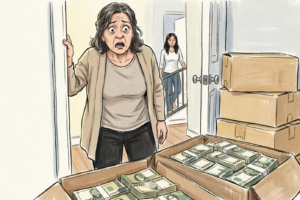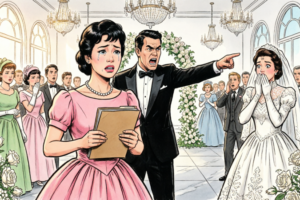

At my sister’s promotion party, I hadn’t even lifted my champagne when she looked at me and said

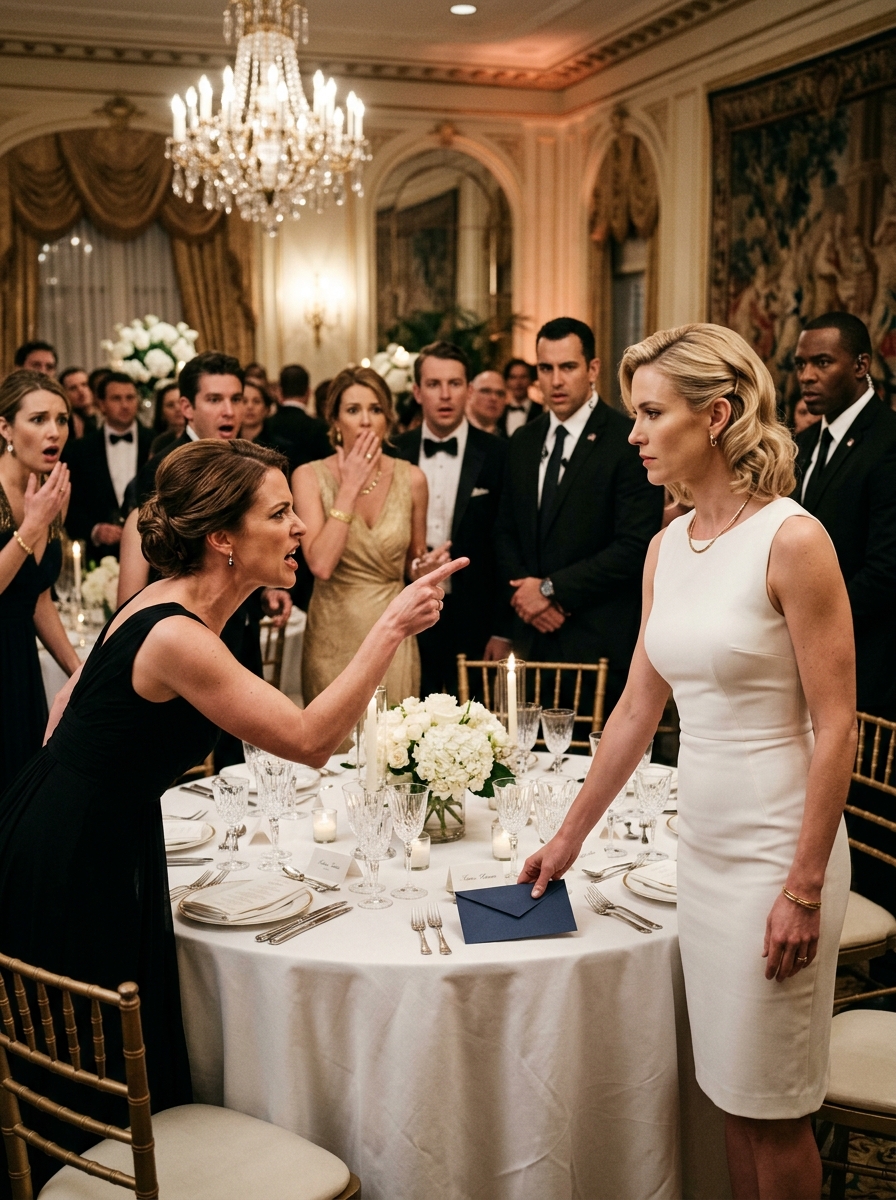
The applause was still rolling when my sister turned from the stage, lifted the mic, and said, “You’re fired. Security will escort you out.”
I hadn’t touched my champagne.
For one second, nobody moved. The band had just finished. Her giant headshot still glowed behind her. Two hundred people in black tie sat there smiling, waiting for the next cue.
Then the room went dead.
A glass hit a table too hard. A fork tapped china. Somebody whispered, “Oh my God.”
I looked at my sister first. Perfect lipstick. Perfect hair. Perfect posture. She looked like someone who had never been denied anything in her life.
Then I looked at my parents.
My mother sat rigid, hands locked in her lap. My father wore that blank face he used whenever he wanted silence to do his work for him. My brother leaned back like this was ugly but necessary.
No one stopped her.
That was enough.
I stood. Slow. Clean. No scene.
I took the badge off my neck and looked at it once.
Under my name, beneath the company logo I had helped redesign eight years earlier, it said one word.
Guest.
Not partner. Not founder. Not board member. Guest.
I set it beside my untouched glass.
Two security guards started toward me. I raised a hand. They stopped.
“I know where the door is,” I said.
My sister opened her mouth like she had another line ready. I didn’t give her the chance. I picked up my clutch, smoothed my dress, and walked out through a room full of people suddenly fascinated by their bread plates.
Nobody said a word.
That was what stayed with me later. Not her voice. The silence. The way a room can agree, without speaking, that one person is expendable.
The ballroom doors shut behind me.
Outside, the corridor smelled like lemon polish and old air-conditioning. My pulse was steady. I hated that. I thought I’d be shaking. Instead I felt cold. Focused.
By the time I reached my SUV, rain had started.
I sat behind the wheel and looked at my own face in the windshield.
You’re fired.
She thought that meant something.
It only matters when the person doing the firing has the right.
I drove home in silence. Twenty-six minutes through wet downtown St. Louis. Wipers. Turn signal. Breathing.
Memories kept surfacing on their own. My father signing papers while watching football. My sister taking credit in a board meeting and smiling while everybody praised “her instincts.” My brother saying family like it was a weapon.
When I pulled into my garage, the motion light snapped on. White concrete. Workbench. Printer. File boxes. Two legal pads. The laptop I’d left charging that morning.
I hadn’t built any of that for revenge.
I built it because in our company, if I didn’t keep records, facts changed shape.
I didn’t go inside. Didn’t change clothes. Didn’t wash my face.
I opened the laptop on the hood of the car.
Face recognition. Unlock. Desktop. Folders.
I clicked one labeled Continuity.
Fifteen years of the company’s real history sat there. Ownership agreements. Board minutes. Emails. Client notes. Vendor disputes. Scanned contracts with coffee stains and crooked signatures. All the boring paper that kept the place alive while louder people stood in front of cameras and talked about vision.
My phone started vibrating before I opened the first file.
My brother.
Then my mother.
Then my sister.
Earlier that morning, before the dress, before the mascara, before the hotel, I had blocked every family number I had.
Now all I got were voicemails trying to slip through.
I ignored them.
At the bottom of the folder sat one scanned page I knew by heart. One signature. One date. One clause buried exactly where nobody in my family had ever looked because they thought details were for other people.
I opened it.
Three hours earlier my sister had fired me in public.
What she had actually done was pull a pin.
The countdown had already started.
Part II: Equity
I was eighteen the first time I understood my family didn’t control people by yelling.
They controlled people by making things feel settled before anyone else could speak.
Back then the company was still a warehouse in North St. Louis. Bad insulation. Flickering lights. Concrete floor. Summer heat. Winter cold. Dust. Oil. Cardboard.
Most of my friends were picking colleges.
I was doing twelve-hour days in steel-toe boots for a company my father still called my business even when half the invoices had my handwriting on them.
That afternoon he called me over to a folding table near receiving.
“Sign this.”
He didn’t look up. Football was on the tiny TV. He had one eye on the screen.
The contract offered salary, insurance, a title, incentives. It looked generous. That was always the family move. Nothing openly cruel. Just traps dressed like opportunity.
My sister stood behind him spinning a ring of office keys around one finger. She was twenty, fresh out of community college, loud, pretty, and good at making people feel smart for liking her.
I read the contract once and put it down.
“I want equity.”
Dad gave a short laugh through his nose. “Take the money, Megan. Equity is paper. Salary is real.”
“I know what equity is.”
“You’re eighteen.”
“And I still know.”
The warehouse kept moving around us. Forklift beeps. Tape guns. Somebody swearing.
I stayed calm because I had already done the math.
I knew our clients. I knew our margins. I knew which vendor was quietly overbilling us because nobody compared revised invoices to originals.
If I was going to give the company my twenties, I wasn’t doing it for applause and a paycheck.
Dad rubbed his jaw. “This isn’t a negotiation.”
“It is if you want me here.”
He finally looked at me. Same gray eyes. Same blood. Different species.
My sister clicked her keys louder. “You always make everything difficult.”
I slid my own paper across the table.
“It’s a conversion agreement. Lower salary. Minority equity. More tied to performance.”
Dad barely read the title. His team on TV was driving downfield.
“You can say no,” I told him.
He signed.
That was it.
My sister leaned in close. “One day, you’re going to regret being so difficult.”
“Maybe,” I said.
I meant no.
The company grew. Fast and sloppy. Money came in. My sister got bonus envelopes in public. New titles. Visible wins.
When bonus season came for me, I didn’t take cash.
“I’ll take another point.”
Dad signed again.
The second time was easier. The third time was automatic.
That taught me something useful. Once someone decides you’re harmless, they stop reading.
My brother joined the year after that. Older than me by two years. Smooth. Lazy. Protected. He lost records. Forgot callbacks. Missed details. Dad told me to fix it. Mom said he had too much on his plate.
If I missed anything, it became a flaw in my character.
I stopped arguing about fairness. Fairness is a word people with power use when they don’t intend to give any up.
So I kept trading what they valued—cash, praise, titles—for what they didn’t.
Paper.
Years later, in 2012, my sister nearly pushed us into a partnership that would have bled the company dry. We were in the old living room. Pot roast in the air. Football flickering. Men on a laptop screen talking about synergy and upside.
I’d already run the numbers.
“Good deal or not?” Dad asked.
“No.”
My sister snapped, “You haven’t even let them finish.”
“I have the financials. I don’t need the adjectives.”
Mom made her usual warning sound.
I slid another paper under the contract while my sister talked and Dad watched the game.
Dry language. Easy to ignore. Contingency authority. Governance protections. Bad-faith executive action.
Dad signed where I marked.
My sister stared. “What did you just add?”
“A safeguard.”
“For who?”
“For the company.”
She laughed. “Why do you always have to insert yourself into everything?”
Because none of you can run this place, I thought.
Later that night I scanned every page and saved them in two places.
One of those pages would become the quietest weapon in the building.
At the time, all my family knew was that I had done it again.
Read too closely. Asked too much. Made myself harder to erase.
They thought that was my weakness.
It was the map.
Part III: Guest Pass
By my late twenties the company had moved downtown into glass and steel. Polished lobby. Expensive chairs. Coffee machine that hissed like a threat. From the outside, it looked like my sister’s story had come true.
Inside, it was held together by dull decisions and quiet repairs.
Mine.
I rebuilt vendor terms after my brother promised discounts he couldn’t authorize. I caught payroll errors before they hit two hundred people. I sat with legal when a draft came back broad enough to swallow us whole. When clients got angry, I took the calls.
At family dinners, I was still “helping out at the office.”
I stopped caring what my family thought. I watched the board instead.
The board noticed patterns. Mrs. Adams noticed numbers improving. Scott noticed I answered questions without slogans. Henderson noticed everything.
I never campaigned. I just put accurate information in front of the right people.
Over time, that builds something louder than charm.
Three hours before the gala, I arrived early. I had written a real toast. Stupid, maybe. But I still thought the company mattered more than the family using it as a stage.
The ballroom was half lit. Staff moved between tables. The room smelled like lilies and coffee and hotel butter.
The screens beside the stage cycled through the presentation.
My sister’s face. New CEO.
My brother’s face. Vice President of Sales.
Then the line below them.
Leading the Future of the Family Company.
I stood there and felt something inside me lock.
A staffer walked over with a clipboard. “Sorry. Are you with catering or AV?”
“Neither.”
He apologized. I moved on.
At the seating chart, my name was at table twelve.
Not table one. Not with family. Not with the board.
Table twelve.
At registration, the badge waiting for me said the same thing.
Guest.
I put it on.
Sometimes evidence has to touch your skin.
At table twelve, I sat beside a vendor I had personally kept alive two years earlier and an investor who introduced himself twice because he didn’t know who I was.
My toast stayed folded in my clutch.
I never used it.
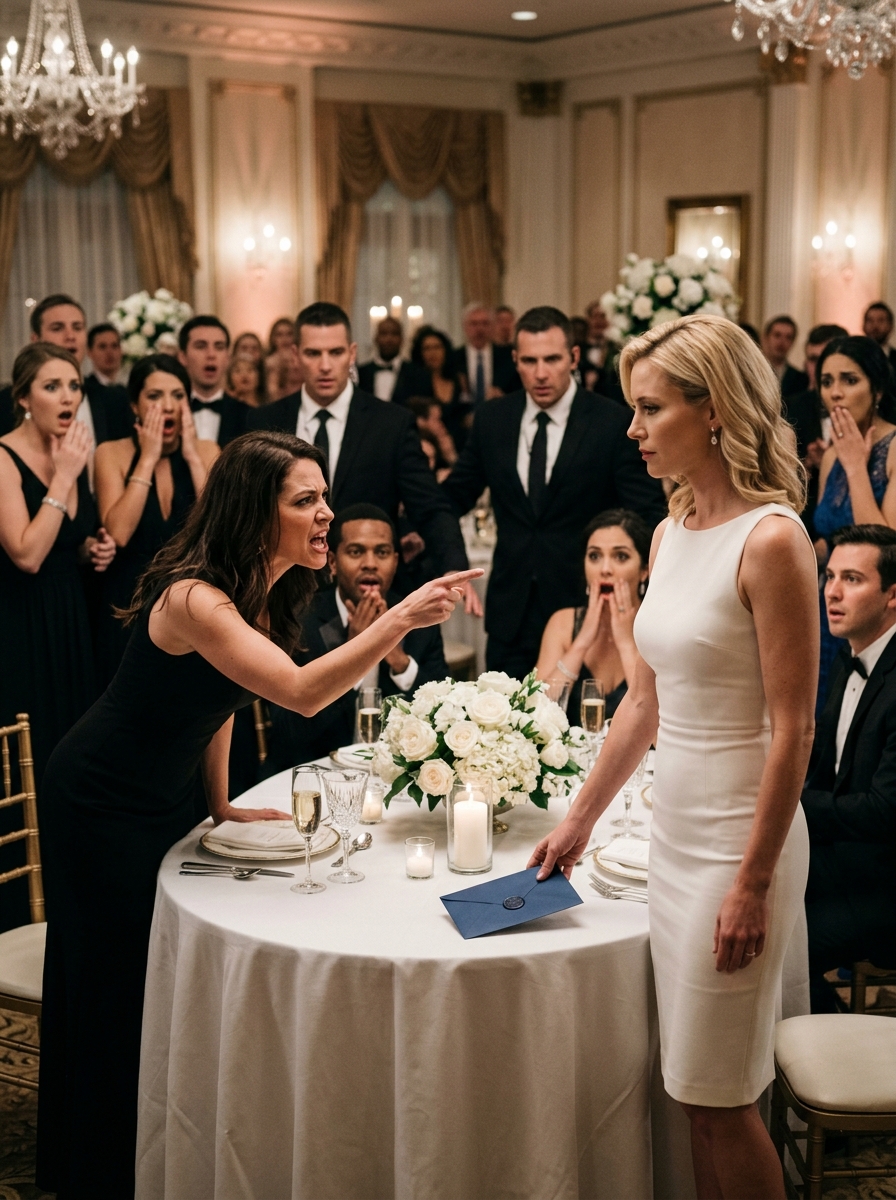
Halfway through dessert, my sister took the mic, looked straight at me, and started talking about alignment and culture and hard decisions.
Then she said my full name.
Then: “You’re fired. Security will escort you out.”
There it was.
Not impulse.
Ceremony.
As I walked out under two hundred pairs of eyes, I understood the real point.
I hadn’t just been excluded.
I had been erased on purpose.
And if they were willing to do that in public, it meant they believed I had nothing they still needed.
That was their mistake.
Part IV: The Trigger
Back in my garage, I opened Governance and started with ownership.
The numbers were exactly where I expected. Years of taking equity instead of cash. Quiet conversions. Protective clauses. Anti-dilution language. Signatures nobody had read. By the time my family finished handing me paper they thought was harmless, I held the largest individual stake in the company.
Not a dramatic majority.
Better.
A decisive plurality under the rules they had all signed.
Then I opened the clause from 2012. The boring one. The one my father signed while watching football.
Perfect.
I drafted the emails.
Board chair first.
Then Adams. Scott. Henderson. Outside counsel.
No drama. No threats. Just facts, attachments, and the AV transcript of my public termination.
I hit send.
The garage went quiet.
Then the read receipts hit.
Henderson first. Received. Reviewing now.
Miller next. Enforceable. Proceed.
That was enough.
People think power feels electric.
It doesn’t.
It feels administrative.
Correct signatures. Correct timing. A lawyer who understands what matters because you spent years feeding him clean paper before anyone else thought to ask for it.
My blocked phone kept lighting up.
I ignored it.
Some things hit harder on paper, so I printed everything again. Governance trigger. Emergency notice. Signature pages. Summary sheet.
Courier pickup in fourteen minutes.
While I waited, I logged into the internal voting portal I had built after the old system crashed during a compensation vote and my brother blamed “the software” instead of his own negligence.
I activated the emergency template.
Then I sat still and listened.
Rain.
Printer cooling.
Dog barking somewhere outside.
My own pulse.
That was when memory tried to soften me. My sister at sixteen on my bed stealing nail polish. My mother making lunches. My father teaching me to drive.
Cheap mercy.
I let it pass.
The courier came. I handed over the packets. Once they were moving, the night tipped past reversible.
Then I sent the final page.
Hotel security authorization under board instruction.
Not to remove me.
To hold the room.
Hotel management wrote back fast.
Counsel advises compliance.
My sister’s party was still going on.
I pictured her laughing under stage lights, thinking the hard part was over.
Then Henderson’s message hit.
Room will be held. Return now.
I closed the laptop, opened it once more, then picked up my keys.
She still thought she had fired me.
She had just fired herself.
Part V: Vote
The ballroom felt different when I came back.
Same lights. Same flowers. Same expensive noise. But the corridor had tightened. Security wasn’t drifting anymore. Staff were speaking lower. The room had started to smell the legal risk.
Good.
Inside, some people still hadn’t caught up. A man at table six was showing someone boat pictures. Two women near the back were taking selfies.
The board had caught up.
Phones checked. Faces changed. Henderson and Miller were standing together. Scott was polishing his glasses. Mrs. Adams sat very straight.
My sister saw me halfway to the stage.
First confusion. Then irritation. Then she glanced at the security guards, expecting them to move.
They didn’t.
I set my laptop on the presentation stand.
Henderson stepped beside me. No questions. He had already read the documents.
He nodded to the AV tech.
My sister’s giant headshot vanished. Black screen. Then white text.

Related posts