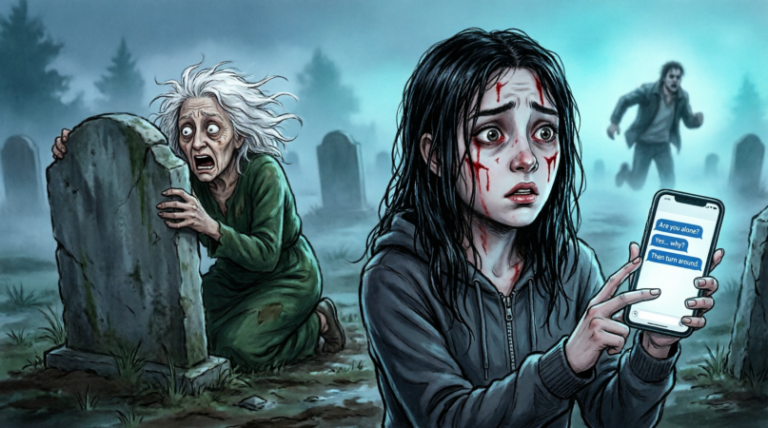

Part1: They Canceled My Ticket and Went on Vacation Without Me, But Their New Year Became a Lesson They Never Saw Coming

At the airport, I was told my ticket was canceled. My family boarded without even looking back. That night, my sister texted, “You should be used to being left out by now.” I just replied, “Don’t worry. Your new year will be unforgettable.” When they came back, their phones lit up with alerts. After that, their lives began to fall apart….
I knew something was wrong before the airline agent said a word, because people who work at airport gates have a special way of going quiet when they see bad news on a screen.
She scanned my boarding pass once, then again, while my seven-year-old daughter stood beside me in her pink winter coat, holding my hand with the kind of trust that made every betrayal feel twice as sharp. Behind us, the line moved in an impatient shuffle of rolling suitcases, paper coffee cups, puffy jackets, and families laughing too loudly because New Year’s trips make people feel like their real lives are temporarily suspended.
My family was already near the front of the boarding lane. My mother had her cream scarf wrapped perfectly around her neck, my father was checking his watch like he had personally invented punctuality, my brother was joking with our cousin, and my sister Marissa was taking selfies with her husband beneath the departure sign.
My daughter lifted her free hand and waved.
No one waved back.
At first, I told myself they hadn’t seen her. That was what I had been doing my whole life with my family, translating cruelty into accidents so I could keep loving people who made it difficult.
The trip had been planned for two months. There had been group chats, booking screenshots, weather forecasts, grocery lists, and dozens of messages about the cabin in Colorado with heated floors, a massive stone fireplace, a private hot tub on the deck, and snow expected just in time for New Year’s Eve.
I had sent my share almost immediately. Thirteen hundred dollars, transferred without complaint, because that was who I had always been in my family.
The dependable one.
The one who paid first, fixed quietly, covered gaps, remembered passwords, handled account links, set up automatic payments, and pretended not to notice when nobody remembered to thank her.
The agent looked at my ID, then looked back at the screen. Her expression stayed polite, but something in her eyes changed, and that tiny shift made my stomach drop before she even spoke.
“Ma’am,” she said carefully, “this reservation appears to have been canceled.”
I stared at her.
“That’s not possible,” I said, keeping my voice low because my daughter was looking up at me. “I paid for this ticket. My family is on this flight. We’re all together.”
The agent typed again, called another employee over, and asked whether someone else had managed the booking. I said yes, my sister had handled the group reservation, because Marissa liked controlling anything that came with confirmation numbers and attention.
That was when the second agent gave me a look I still remember.
Not pity, exactly.
Recognition.
Like she had seen people abandoned before and hated being the person who had to say it out loud.
I stepped away from the counter and pulled out my phone. I texted Marissa first, then my mother, then my brother, my fingers moving too quickly across the screen while my daughter asked if we were still getting on the plane.
No one answered.
Then I looked up and saw them boarding.
My mother handed over her phone. My father followed. My sister laughed at something her husband said, tucked her hair behind one ear, and walked down the jet bridge in the same camel coat she had posted online that morning with the caption, “New year, new peace.”
My brother went after her. My cousin too, the same cousin who had somehow avoided paying his share for groceries last Thanksgiving and still ended up with leftovers.
Not one of them turned around.
My daughter tugged my sleeve, and I felt the whole airport narrow into that one small pull.
“Mom,” she asked, “are we going?”
I swallowed so hard it hurt.
“No, baby,” I said. “We’re not.”
The Uber ride home was quiet except for the hum of the heater and the soft thud of my daughter’s boots against the seat. She looked out the window for most of the drive, still wearing the little knit hat she had picked out for snow pictures, and I stared at my phone as if staring hard enough could make someone in my family finally answer.
Nobody did.
At home, I carried our bags back inside one by one. The apartment looked exactly the way we had left it that morning, breakfast bowls rinsed in the sink, a half-zipped backpack on the couch, mittens drying near the radiator, everything waiting for a version of the day that no longer existed.
I put my daughter in pajamas, made her grilled cheese because it was the only thing she wanted, and told her we would go sledding somewhere local if we could find enough snow. She nodded like she believed me, but her eyes were too quiet.
After she fell asleep, I sat on the edge of my bed and opened the family group chat.
Four days earlier, Marissa had written, “I’ll handle the final confirmations.”
Nobody questioned it. Why would they? Marissa had always loved being the family’s little manager when it made her feel important, and I had always loved peace enough to let her.
At 10:07 p.m., after hours of silence, her message finally came through.
“You should be used to being left out by now.”
No apology.
No explanation.
No pretend confusion.
Just those words, sitting on my screen like a door locked from the other side.
I read them once. Then again. Then I looked toward my daughter’s room, where the night-light painted a soft yellow stripe across the hallway, and something inside me went very still.
For years, I had mistaken being needed for being loved.
I paid my parents’ utility bills when their account overdrafted. I kept the streaming subscriptions under my email because nobody else wanted to deal with passwords. I helped my brother cover truck repairs when he swore he would pay me back “after the next paycheck.” I set up the emergency savings account because my mother said every family needed a safety net, and somehow I became the net.
I had never made a speech about it. I had never held it over their heads. I had never posted screenshots or demanded public gratitude.
I simply showed up.
And they left me at an airport with my child.
I typed back one sentence.
“Don’t worry. Your new year will be unforgettable.”
Then I opened my laptop.
The first password I changed was for the shared expense document, the one Marissa loved using whenever she wanted to prove she was organized. Then I removed my debit card from my parents’ utilities, canceled the streaming accounts tied to my email, disconnected the family Spotify plan, and logged out every device I did not own.
After that, I went deeper.
The PayPal account I had set up for my father years ago, the one linked to backup payments for family reservations, was mine. The joint account used for large purchases had my name on it, too. The emergency fund they treated like a magical bucket they could dip into whenever responsibility became inconvenient had my contributions sitting right there, cleanly traceable and legally mine to withdraw.
So I withdrew them.
Not a dollar that wasn’t mine.
Not one thing I didn’t have the right to remove.
I simply stopped being available.
By the time I closed my laptop, it was almost three in the morning. My hands were steady, my face was dry, and my family was somewhere above the clouds, probably sleeping against airplane windows, thinking I was home crying into a pillow.
They forgot quiet women can still read contracts.
They forgot safety nets can be untied.
They forgot I had spent years learning every account, every due date, every backup card, every password, because I was the only one they trusted when life needed fixing.
They landed the next morning and started posting immediately.
Marissa uploaded a video of snow falling outside the cabin window, with her coffee cup placed carefully in the foreground like she was filming a commercial for peace she had not earned. My brother posted the living room, all wood beams and orange firelight, while someone laughed off camera and my mother wore the fuzzy robe she had mentioned three separate times in the chat.
I watched from my apartment while my daughter ate cereal at the kitchen table and asked whether we could still do something fun.
“Yes,” I told her. “We absolutely can.”
I let them have the first day.
I let them enjoy the fireplace, the snow, the hot tub, the fake little captions about rest and family and breathing again. I let Marissa post a photo of everyone holding mugs on the deck, cropped just tightly enough that nobody missing from the picture would look accidental.
Then the first message came.
My cousin texted, “Did you change the password to the expense doc?”
I didn’t answer.
Marissa sent one word.
“Seriously?”
Still, I didn’t answer.
By the second night, things had started to crack. My mother left a voicemail saying they were having “some issues” with a reservation and wondered if I had “updated something on my end,” her voice bright and careful in the way people sound when they are scared but still trying to pretend they have authority.
Then my father’s card declined at a steakhouse in town.
Twice.
I knew because my brother texted me, then deleted the message, then texted again asking if the joint account was “acting weird.” It was not acting weird. It was acting independent for the first time in years.
That same night, the cabin host emailed Marissa about the second half of the rental fee. The deposit had been charged through a card connected to an account I managed, because everyone had assumed I would be there to quietly smooth things over.
But I was not there.
They had made sure of that.
By day three, Marissa stopped posting. By day four, my brother left early, though my mother claimed in the group chat that he had a work emergency. By day five, alerts started rolling in from banks, payment apps, subscriptions, and accounts that had always worked because I made sure they worked.
My phone lit up with calls from relatives who usually remembered I existed only when something was overdue.
I let every call ring.
Then, on day six, while my daughter and I were building a lopsided snowman in the courtyard outside our apartment, my mother finally sent the message I had been waiting for.
“What’s happening?”
I looked at those two words for a long time.
Not “I’m sorry.”
Not “Where are you?”
Not “How is my granddaughter?”
Just panic, now that the ground beneath them had started to move.
I put my phone back in my pocket and helped my daughter press a baby carrot into the snowman’s face.
That afternoon, the family group chat began unraveling in real time. My mother asked if anyone could access the emergency account because the mortgage payment had bounced. Marissa said she couldn’t log in because the account no longer existed. My brother asked what happened to the savings.
I watched the messages stack on top of each other like people pounding on a door they had locked themselves.
Then, just after 6 p.m., another notification appeared.
It was from the cabin property manager.
The subject line read: Final payment failed — urgent response required.
And for the first time all week, I smiled.
Part 2….
The email was polite, but there was steel underneath every sentence. The property manager explained that the outstanding balance had failed four times, the backup card had been frozen, and if payment was not received by 6:00 p.m. the next evening, they would begin formal action for intentional non-payment.
I did not write a caption. I did not add a comment. I simply forwarded the entire email into the family group chat, header, timestamp, and all.
The calls came so fast my phone looked like it was vibrating with guilt.
Mom. Dad. Marissa. My brother. My aunt from Florida. Even my cousin, who suddenly seemed very interested in family unity now that the cabin host wanted money from the people actually sleeping under that roof.
I answered none of them.
Then a blocked number called. I almost ignored it, but something made me pick up.
The woman on the other end introduced herself from the county sheriff’s office and said she was following up on a civil complaint regarding a luxury rental property. My name had been listed on the original reservation, and she needed to confirm whether I was still associated with the group.
I told her the truth.
I had been removed from the trip without my knowledge. I never boarded the plane. I never stayed in the cabin. I never received a refund for the $1,300 I had paid.
There was a pause.
“Understood,” she said. “Thank you for your time, ma’am.”
Ten minutes later, Marissa texted, “Did you actually report us?”
I stared at the message and felt nothing but a clean, quiet distance.
They were doing that part to themselves.
The next afternoon, my brother showed up at my apartment with messy hair, tired eyes, and a check folded in his hand. He said he didn’t know Marissa had canceled my ticket. He said he thought I had backed out. He said Mom was scared, Dad was furious, and everyone thought I was trying to get them arrested.
I looked at the check.
$1,300.
My price of admission back into silence.
I did not touch it.
“This stopped being about money the moment my daughter waved at all of you and nobody waved back,” I said.
He had no answer for that.
That night, Marissa sent one final message.
“You’ve always been bitter. You just finally snapped.”
A second one followed.
“You’re not acting like a real daughter.”
I screenshotted both, not because I needed proof for them, but because I needed proof for myself. Proof that when the mask slipped, there was nothing underneath but entitlement wearing family’s name.
The next morning, local news picked up the rental complaint. No names, but the photo from the cabin porch was clear enough for their church friends, neighbors, and Facebook circle to recognize every face they cared so much about protecting.
For the first time in years, they were the ones explaining themselves.
And I didn’t have to say a single word.
SAY “OK” IF YOU WANT TO READ THE FULL STORY — sending you lots of love
At the airport, the agent told me my ticket had been canceled, and while I stood there holding my daughter’s hand, confused and humiliated in front of a line of strangers, my family boarded the plane without even looking back. That night, after hours of silence, my sister finally texted, “You should be used to being left out by now,” and I replied with the calmest sentence I had ever written in my life: “Don’t worry. Your new year will be unforgettable.”
I still remember the fluorescent brightness of the boarding area, the smell of burnt airport coffee, the squeal of suitcase wheels against the polished floor, and my daughter’s small hand tucked inside mine while everyone around us looked like they were headed toward something happy. People were taking selfies with their neck pillows, balancing Starbucks cups on top of carry-ons, laughing about who had packed too much, and there I was, trying to keep my daughter excited for a trip I had helped pay for, plan, and believe in.
My parents were near the front of the line, dressed in their heavy winter coats, my mother fussing with her scarf like she was the star of some cozy holiday commercial. My sister was snapping pictures with her husband, my brother was throwing jokes around the way he always did when he wanted the whole room to know he was in a good mood, and my cousin, who had somehow managed to come on this trip despite never contributing to anything that did not benefit him directly, was already bragging about the cabin hot tub.
My daughter lifted her little hand and waved at them. No one waved back.
This trip had been planned for two months, and I had the group chat receipts to prove it. Booking links, cabin photos, grocery lists, rental car details, screenshots of the mountain forecast, jokes about who was bringing board games, debates about whether we needed snow boots, and a dozen messages about the private hot tub on the deck, the heated floors, the massive fireplace, and the snow expected to fall on New Year’s Eve.
I had been the third person to send in my share. Thirteen hundred dollars, split like everyone else’s, and I sent it the same day my sister asked because I did not want to be the problem, did not want anyone whispering that I was difficult, and did not want my daughter to miss a rare family vacation because I had hesitated over money.
It was supposed to be a week away from everything. A fresh start, a snowy reset, the kind of trip families take in those ads where everyone wears matching socks and plays cards by the fire, and maybe that was foolish of me, because by then I should have known my family only liked togetherness when I was helping finance it.
The airport was packed, and I was nervous, though I kept telling myself it was only because flying with a child makes every detail feel heavier. I double-checked our bags, our coats, my purse, the folder with our confirmation, my daughter’s snacks, her headphones, the little stuffed fox she insisted on bringing because he had “never seen snow before.”
Everything was in place until suddenly it was not. The moment the airline agent scanned my ticket, I felt the mood shift before she said a word.
She scanned it once, then again, her expression carefully neutral in that trained customer-service way that makes bad news feel even worse. Her eyes moved quickly to another screen, then she asked to see my ID, and when she stepped aside to call another agent over, I felt my stomach drop into a place I could not reach.
I asked what the issue was. She said my reservation had been canceled.
She said it quietly, like it was something I already knew and had simply forgotten to mention. I asked her to check again, because there had to be a mistake, and she did check again, typing quickly, scanning, comparing, pausing with the same tight expression that told me the answer had not changed.
I told her that could not be right, that I had paid, that my entire family was on this flight, that we were all part of the same trip. She asked if someone else had booked the reservation for me, and I said yes, my sister had handled the group booking, because my sister always handled that kind of thing and everyone trusted her to do it.
That was when the second agent gave me a look I will never forget. It was not rude, not impatient, not exactly pitying, but something more complicated, the look of a woman who had just understood a story I was still standing too close to see.
I stepped away from the counter, my daughter tugging gently at my sleeve and asking if we were getting on the plane. I told her, “Just a minute, sweetheart,” in the soft voice mothers use when panic is already rising but children are still listening.
I grabbed my phone and texted my sister first. Then my brother. Then my mother.
No one answered.
I looked up from my phone and saw them boarding. My parents disappeared into the jet bridge first, then my sister and her husband, then my brother, then my cousin, all of them walking forward like nothing had happened, like I was not standing twenty yards away with my child and a canceled ticket.
Not one of them turned around. Not one.
My daughter watched them go with a confused little crease between her eyebrows, and then she asked the question I had been dreading. “Are we still going on vacation?”
I looked at the agent, then at the jet bridge, then at my daughter’s face, and whatever small hope I had been holding went cold. “No,” I said, because there was no gentle lie big enough to cover what had just happened.
The Uber ride home was silent except for one question. My daughter, strapped into the back seat with her stuffed fox in her lap, asked if I was mad.
I told her I was not, but that was only because I did not know how to explain the difference between mad and whatever had taken root inside me by then. Mad was too small, too hot, too temporary, and what I felt was colder than that, deeper than that, something almost still.
At home, I helped her take off her coat, made her a bowl of cereal because she suddenly said she was hungry, and then sat on the edge of my bed with my phone in my hand. I scrolled through the group chat until I found the message from four days earlier, the one from my sister saying, “I’ll handle the final confirmations.”
No one had questioned it. Why would they?
She always handled the social details, the reservations, the little bits of family performance everyone praised her for, while I handled the things that kept our family from financially collapsing every time someone forgot a bill, overdrew an account, or needed money before payday. This time, apparently, she had handled me right out of the plane.
Around ten o’clock that night, after ignoring my calls and messages for hours, my sister finally texted me back. No apology, no explanation, no panic about the mistake, no “Oh my God, I thought you canceled,” no attempt to pretend it had not been deliberate.
“You should be used to being left out by now.”
I stared at the words for maybe ten seconds. Then I typed, “Don’t worry. Your new year will be unforgettable.”
After that, I got to work.
They had forgotten who they were dealing with, or maybe they had never understood it in the first place. They had forgotten how much of the family’s quiet financial machinery ran through me, how many accounts had my name attached, how many payments cleared because I was the one watching, how many emergencies dissolved because I stepped in before anyone else had to feel uncomfortable.
Bills, subscriptions, auto payments, shared savings, backup cards, household accounts, my parents’ mortgage emergency buffer, my brother’s truck repair fund, the family streaming plans, the shared expense document, the emergency account everyone contributed to in theory but I kept alive in practice. For years, I had been the one they leaned on quietly, without thanking me loudly enough for anyone else to notice.
I had never complained. I had never made it a thing.
That night, I logged into every shared account, changed every password I had the authority to change, pulled out every dollar with my name legally attached to it, removed every payment method that belonged to me, and severed every financial thread they had treated like family love instead of access. By the time I was done, I was not part of the family system anymore.
I was something else. And that was only the beginning.
They landed early the next morning. My sister posted one of those fake candid videos people take when they want everyone to know they are relaxed but also want to be envied for how beautifully they relax.
Snow fell in slow motion outside the cabin window, her coffee cup sat in the foreground, a soft playlist played behind the clip, and the caption said, “Finally breathing again.” A few minutes later, my brother posted a video of the living room, all exposed wood beams, fire crackling in the hearth, someone laughing off screen, probably my cousin, and my mother already wearing the fuzzy robe she had mentioned three separate times in the group chat.
They looked cozy. Carefree. As if nothing had happened.
I watched it all from my apartment while my daughter ate cereal at the kitchen table and asked if we could go sledding later, since we were not going on the “big snow trip.” I told her yes, because she deserved at least one promise that day that someone intended to keep.
And I smiled. Not because I was fine, and not because what they had done did not hurt, but because now I had a plan.
They thought leaving me behind was something I would cry about, complain about, and eventually get over because that was how it had always worked. They forgot I was the one who handled things, and people who never handle things themselves often do not understand how fragile their comfort really is.
The first day, I did not do anything obvious. I wanted them to get comfortable, to post their little videos, settle into their rented luxury, pour coffee in front of snowy windows, and pretend they were living inside a Pinterest board.
I gave them twenty-four hours of peace. Then I started.
The first thing I did was remove my debit card from the utility bills at my parents’ house. My name was the only one on autopay, and the bills would not bounce immediately, but the chain would begin soon enough.
Next, the streaming services. Netflix, Hulu, Spotify family plan, everything tied to my email and my card.
I did not just change passwords. I shut the accounts down entirely.
They would find out later, probably in the middle of some movie, maybe with everyone curled by the fireplace and my sister making cocoa for an Instagram story. I pictured the TV freezing halfway through, the error message appearing, and the room going quiet in that particular way people go quiet when something invisible they relied on suddenly disappears.
By noon, my phone was buzzing. A missed call from my cousin, which I ignored.
He texted, “Did you change the password to the expense doc?” I let it sit.
Then my sister sent one word: “Seriously?”
Still nothing from me.

Related posts